
News & Event
What is Carrageenan Food Additive (INS 407 / E407)? Insights into Red Seaweed Extract for Texture & Elasticity in Jelly, Vietnamese Ham, and Sausages
Compiled by Tan Hung Phu Technical Team · Updated:
In modern food processing technology, engineering natural crispness and elasticity for emulsified meat products (Vietnamese ham, sausages, fish balls, meatballs), forming crystal-clear dessert jellies, or preventing cocoa sedimentation in UHT sterilized dairy beverages consistently demands hydrocolloid systems capable of deep synergistic interactions with proteins and mineral cations. Standing out among marine-derived biogelling agents is carrageenan (international designation: carrageenan food additive, functional code INS 407 or E407). Sourced entirely from natural red seaweed, carrageenan powder provides an industrial-grade additive solution that enables food manufacturers to tightly regulate water-fat retention, reduce thermal cooking loss, and standardize finished product texture in compliance with international and Ministry of Health standards.
Executive Summary
- Additive Identification: Carrageenan (International codes: INS 407 / E407 and INS 407a, CAS: 9000-07-1), a natural sulfated polysaccharide obtained through red seaweed extraction (Kappaphycus alvarezii & Eucheuma denticulatum).
- Three Structural Classes: Kappa (κ) forms firm, brittle gels in the presence of K+ ions; Iota (ι) forms soft, elastic, non-syneresis gels with Ca2+ ions; Lambda (λ) is cold-water soluble, acting purely as a non-gelling thickening and bodying agent.
- Key Applications: Provides firm, elastic bite and water binding in ham, sausages, and fish balls (dosage 0.3% – 0.6%); creates elastic dessert jellies and puddings (0.5% – 1.2%); and serves as an effective dairy stabilizer preventing cocoa settling at micro-doses (0.015% – 0.04%).
- Technical Principles: Dry-blend with sugar or salt (1:3 to 1:5 ratio) to eliminate lumping, heat to ≥ 75°C – 85°C for full hydration, and add acidulants only at the conclusion of processing (≤ 65°C) to prevent acid hydrolysis and polymer degradation.
Table of Contents:
- 1. What is Food Additive Carrageenan (INS 407 / E407)? Red Seaweed Origin
- 2. Gelling Mechanism & Comparison: Kappa, Iota, and Lambda Carrageenan
- 3. Core Industrial Applications: Processed Meat, Dessert Jelly, and Dairy Stabilization
- 4. Dosage Guidelines (Codex/GMP) and Technical Dispersion Rules
- 5. Carrageenan Marcel Philippines (Product Code THP2) Distributed by Tan Hung Phu
- 6. Where to Buy Industrial Carrageenan? Wholesale 25kg Bag Pricing in HCMC
- 7. Frequently Asked Questions (FAQ) on Carrageenan E407
- 8. References & International Food Safety Standards
1. What is Food Additive Carrageenan (INS 407 / E407)? Red Seaweed Origin
From a biochemical perspective, carrageenan (international food additive code: INS 407 / E407, CAS Registry Number: 9000-07-1) is a family of high-molecular-weight linear sulfated galactans (typically 200,000 to 800,000 Da) bearing repeating galactose and anhydrogalactose units. This functional hydrocolloid is extracted naturally from red seaweeds (marine macroalgae of the class Rhodophyta), predominantly cultivated in the tropical waters of the Philippines and Indonesia from two primary species: Kappaphycus alvarezii (commercially known as Cottonii – the source of Kappa) and Eucheuma denticulatum (commercially known as Spinosum – the source of Iota).
In industrial food processing, international regulatory frameworks (JECFA / EU / Codex Alimentarius) categorize carrageenan into two primary grades based on extraction technology:
- Refined Carrageenan (INS 407 / E407): The red seaweed is subjected to hot alkaline extraction to dissolve carrageenan into the aqueous phase, followed by rigorous filtration to eliminate all insoluble cellulosic plant residues. The clear filtrate is then recovered via either alcohol precipitation (using isopropanol) or potassium chloride gel-pressing (KCl Gel Press), dried, and milled. Refined E407 produces high-clarity, brilliant gels, making it the industry standard for transparent dessert jellies, gummy confections, puddings, and UHT dairy emulsions.
- Semi-Refined Carrageenan / Processed Eucheuma Seaweed (INS 407a / E407a): The seaweed undergoes mild alkaline treatment at controlled temperatures to modify the molecular structure within the cellular matrix without dissolving the gum into solution. After thorough washing to remove impurities, it is dried and micronized (retaining approximately 8% – 15% naturally occurring cellulosic fiber). Offering superior mechanical water-binding capacity at an economical cost, PES is widely used in emulsified meats (ham, sausages, luncheon meat) and frozen seafood.
| Parameters & Safety Standards (FCC / JECFA / Codex) | Guaranteed Quality Specifications (Per Batch COA) |
|---|---|
| Additive Name & Code | Carrageenan – Code INS 407 / E407 (or INS 407a) | CAS: 9000-07-1 |
| Physical Appearance | Fine powder, cream to light tan, odorless, neutral taste |
| Viscosity (1.5% Solution at 75°C) | ≥ 5 mPa·s (cps) (Meets JECFA standards; exact values specified per product grade COA) |
| Sulfate Content (as –SO4) | 15% – 40% (On dry basis, conferring negative electrostatic charge density –OSO3−) |
| pH (1% Solution at 25°C) & Moisture | pH: 8.0 – 11.0 | Moisture (Loss on drying at 105°C): ≤ 12.0% Max |
| Standard Granulometry (Particle Size) | 120 mesh – 200 mesh (Microfine granulometry ensuring instantaneous batch dispersion) |
| Heavy Metal Thresholds (JECFA / Legal Limits) | Lead (Pb): ≤ 2.0 mg/kg | Arsenic (As): ≤ 3.0 mg/kg | Mercury (Hg): ≤ 1.0 mg/kg | Cadmium (Cd): ≤ 1.0 mg/kg |
| Microbiological Parameters | Total Plate Count (TPC): ≤ 5,000 cfu/g | Yeast & Molds: ≤ 300 cfu/g | E. coli & Salmonella: Negative / Absent |
2. Gelling Mechanism & Comparison: Kappa, Iota, and Lambda Carrageenan
2.1. The Gelation Mechanism: Thermo-reversible Helical Aggregation
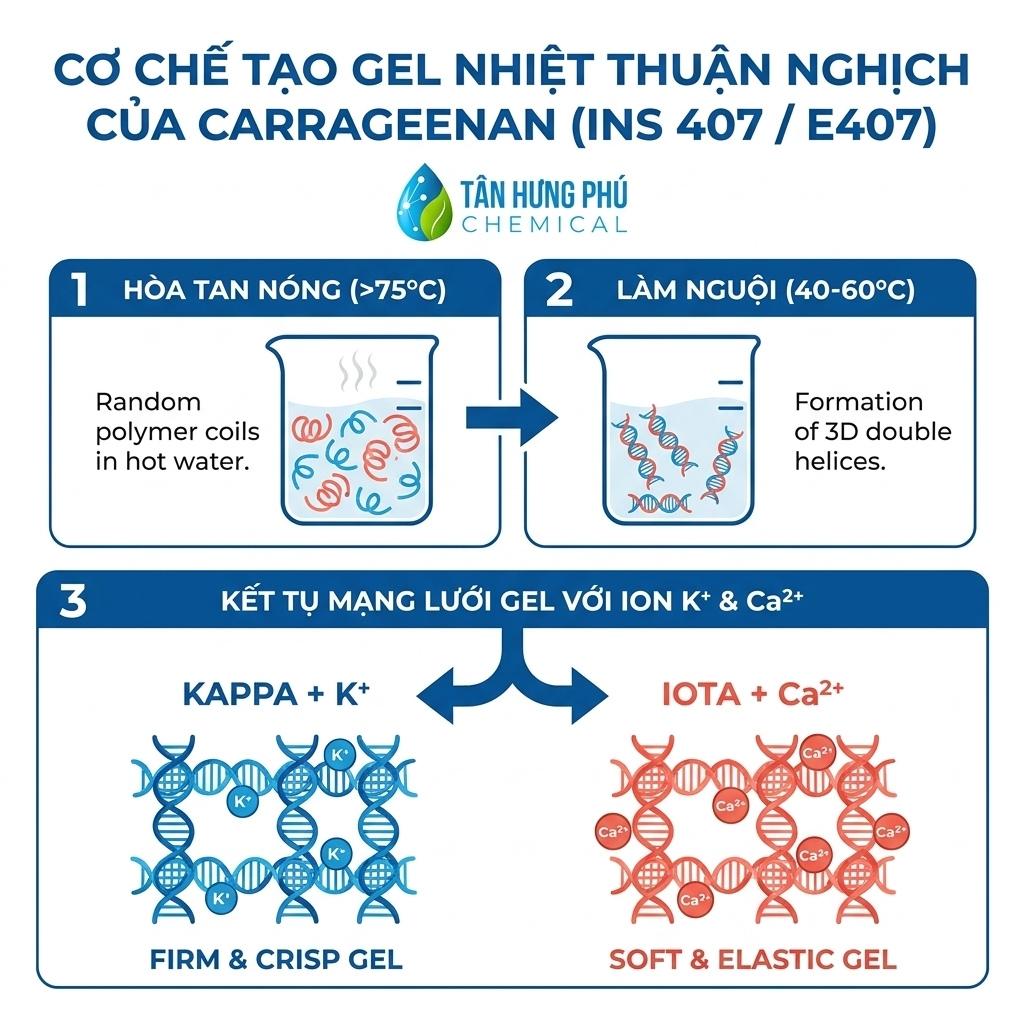
The backbone of carrageenan consists of alternating (1→3)-β-D-galactopyranose and (1→4)-α-D-galactopyranose units, modified with 3,6-anhydro bridges (3,6-AG) and negatively charged ester sulfate groups (–OSO3−). The gelation mechanism is a thermo-reversible phase transition governed by three distinct thermodynamic stages:
- Stage 1 – High-Temperature Dissolution (> 70°C – 80°C) forming Random Coils: In ambient or cold water, Kappa and Iota powders hydrate only partially as swollen granules. Upon thermal processing above 70°C – 80°C, kinetic energy breaks hydrogen bonds, unfolding the polymer chains into fully hydrated, flexible random coils in the aqueous phase.
- Stage 2 – Cooling Transition (40°C – 60°C) into Double Helices: As the solution cools below its critical gelation temperature, the conformational rigidity induced by the 3,6-AG rings drives single-stranded chains to intertwine, forming structured three-dimensional double helices.
- Stage 3 – Cation-Mediated Helix Aggregation (K+ or Ca2+): Due to the high density of negatively charged sulfate groups (–OSO3−), double helices naturally repel one another. When specific cations such as Potassium (K+) or Calcium (Ca2+) are present, they neutralize electrostatic repulsions and form cross-linking bridges between adjacent helices (Helix Aggregation), creating an organized, water-entrapping 3D gel matrix.
2.2. Rheological Comparison: Kappa, Iota, and Lambda Carrageenan
Depending on the number and distribution of ester sulfate groups per repeating disaccharide unit (1, 2, or 3 sulfate groups), commercial carrageenan is fractionated into three primary industrial types with distinct rheological profiles: Kappa (κ), Iota (ι), and Lambda (λ):
| Technical Criteria | Kappa Carrageenan (κ) (1 Sulfate group / disaccharide) |
Iota Carrageenan (ι) (2 Sulfate groups / disaccharide) |
Lambda Carrageenan (λ) (3 Sulfate groups / disaccharide) |
|---|---|---|---|
| Sulfate & 3,6-AG Content | ~25% Ester Sulfate | ~34% 3,6-AG bridge | ~32% Ester Sulfate | ~30% 3,6-AG bridge | ~35% Ester Sulfate | 0% 3,6-AG bridge |
| Water Solubility Profile | Fully dissolves upon heating ≥ 70°C – 80°C (Sodium salt form is cold-water soluble). | Fully dissolves upon heating ≥ 70°C (Sodium salt form is cold-water soluble). | Instantly soluble in cold water at all ambient temperatures without thermal heating. |
| Primary Gelling Ion Cation | Potassium (K+) (Forms tight ionic bridges that markedly boost gel strength). | Calcium (Ca2+) (Provides divalent ionic bridging between adjacent helices). | Non-gelling with any cation (Lacks the 3,6-AG bridge required for helical folding). |
| Gel Texture & Elasticity | Firm, crisp, and brittle gel with high compressive resistance; prone to slight syneresis if used alone. | Soft, compliant, highly elastic gel; fully clear, zero syneresis, displaying thixotropic self-healing properties. | Viscous thickening agent providing rich, creamy mouthfeel without building a gelled matrix. |
| Freeze-Thaw Stability & Synergies | Moderate freeze-thaw stability alone; powerful synergy with Konjac Gum & Locust Bean Gum (LBG) yielding elastic gels. | High freeze-thaw stability. Shows no synergistic gelation response with LBG. | Stable through freeze-thaw processing; strong electrostatic interactions with milk caseins at cold temperatures. |
3. Core Industrial Applications: Processed Meat, Dessert Jelly, and Dairy Stabilization
3.1. Emulsified Meats, Sausages, and Water Retention Agent
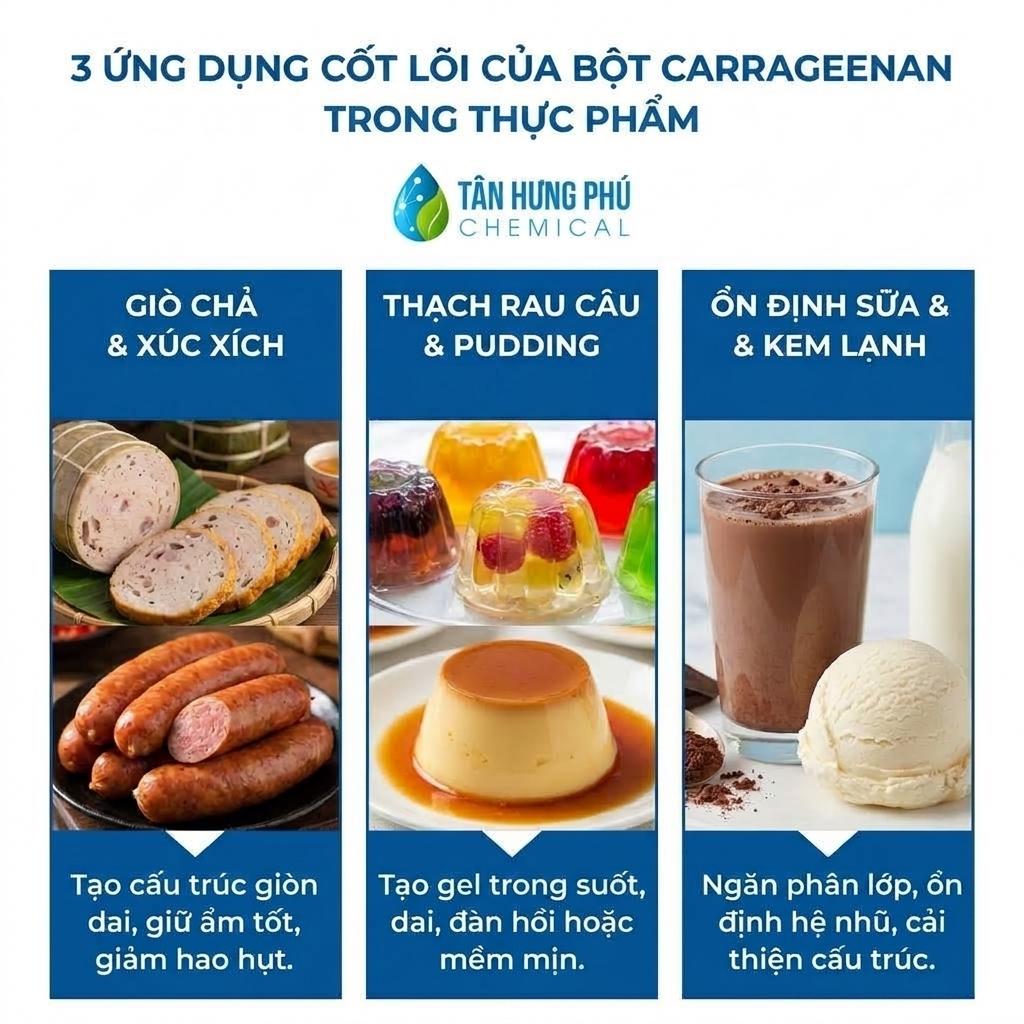
In the processing of emulsified and restructured meat products (Vietnamese bologna/chả lụa, emulsified sausages, fish balls, cured hams, and meatballs), utilizing thawed meat stocks or high thermal cooking regimens frequently causes the myosin protein matrix to shrink, expelling free moisture and rendered fats. Under these conditions, kappa carrageenan acts as an indispensable functional binder and food water retention agent:
- Interpenetrating Protein-Hydrocolloid Network: During high-speed bowl chopping (where NaCl and food-grade phosphates solubilize functional actomyosin), fine carrageenan powder disperses uniformly across the ice-water phase without increasing chopping drag. When the emulsified meat is transferred to cooking chambers at 75°C – 85°C, carrageenan hydrates and establishes electrostatic associations with meat protein filaments.
- Locking Moisture and Engineering a Natural Snap: As the product cools below 55°C post-cooking, carrageenan forms a rigid 3D cross-linked gel network interpenetrating the meat protein matrix. This co-gel structural framework delivers an authentic snappy, elastic bite, produces smooth, glossy cut-surface slicing properties, significantly curtails cooking yield losses, and eliminates purge exudate inside chilled vacuum barrier packages.
3.2. Ready-to-Eat Water Jellies, Puddings, and Gummy Confections
Unlike traditional agar-agar (INS 406), which forms brittle, crumbly, and slightly opaque gels, formulating with Kappa Carrageenan and Iota Carrageenan (frequently blended synergistically with Konjac gum and potassium citrate buffers) provides the structural foundation for modern squeezable pouch jellies (Jelly Drinks), 3Q boba pearls, and European-style flan puddings:
- Optically Brilliant Clarity and Clean Flavor Release: Refined carrageenan (E407) yields exceptionally high optical transmittance, highlighting vibrant fruit colors without dullness and melting cleanly in the palate for rapid, unmasked flavor release.
- Rapid Ambient Setting and Thermal Stability: Formulations set rapidly between 38°C – 45°C and retain firm structural geometry during ambient retail distribution throughout tropical climates without melting.
3.3. Dairy Stabilization (Specific Interaction with Milk Casein Micelles)
In dairy beverage manufacturing (chocolate milk, malted drinks, plant-based dairy alternatives, ice creams, and whipping creams), carrageenan exhibits a unique physical phenomenon known as “Milk Reactivity”:
- Electrostatic Binding to Casein Micelles: At the native pH of fresh milk (pH ~ 6.6 – 6.8), while the overall surface charge of casein micelles is negative, the surface domain of κ-casein contains a concentrated cluster of basic amino acids carrying a localized positive net charge. The negatively charged ester sulfate groups (–OSO3−) of carrageenan electrostatically lock onto these specific localized sites.
- Suspension Efficacy at Micro-Doses (0.015% – 0.04%): By adding as little as 150 – 400 grams per 1,000 liters of UHT chocolate milk, extended carrageenan chains bridge adjacent casein micelles into an ultra-weak, thixotropic fluid network. This structural matrix suspends dense cocoa powder and fortifying calcium salts without settling, while simultaneously inhibiting fat separation and serum syneresis in frozen desserts.
4. Dosage Guidelines (Codex/GMP) and Technical Dispersion Rules
Under the General Standard for Food Additives of the Codex Alimentarius (GSFA – INS 407) and modern regulatory food decrees, food additive carrageenan is authorized under Good Manufacturing Practice (GMP) across most food categories. The optimal dosage rate is determined by the target application, processing conditions, and batch COA parameters:
| Food Industry Sector | Recommended E407 Type | Usage Rate (%) | Standard Dosing (g / kg or L) |
|---|---|---|---|
| Ham, sausages, fish balls, meatballs, burger patties | Kappa (Refined / PES) | 0.30% – 0.60% | 3.0 – 6.0 g / kg meat mass |
| Cured deli ham, brine injection meat systems | Microfine Kappa / Iota | 0.40% – 0.80% | 4.0 – 8.0 g / kg finished meat |
| Water jellies, squeezable pouch jellies, puddings | Kappa + Iota (+ Konjac) | 0.50% – 1.20% | 5.0 – 12.0 g / L liquid base |
| UHT chocolate milk, malted dairy, plant-based milk | Kappa / Iota / Lambda | 0.015% – 0.04% | 0.15 – 0.40 g / L milk |
| Ice cream, whipping cream, dairy emulsions | Kappa (Combined with LBG/Guar) | 0.02% – 0.05% | 0.20 – 0.50 g / kg mix |
| Brewery kettle finings (Beer wort clarification) | Brewery-grade Kappa | 0.002% – 0.005% | 2.0 – 5.0 g / 100 L wort |
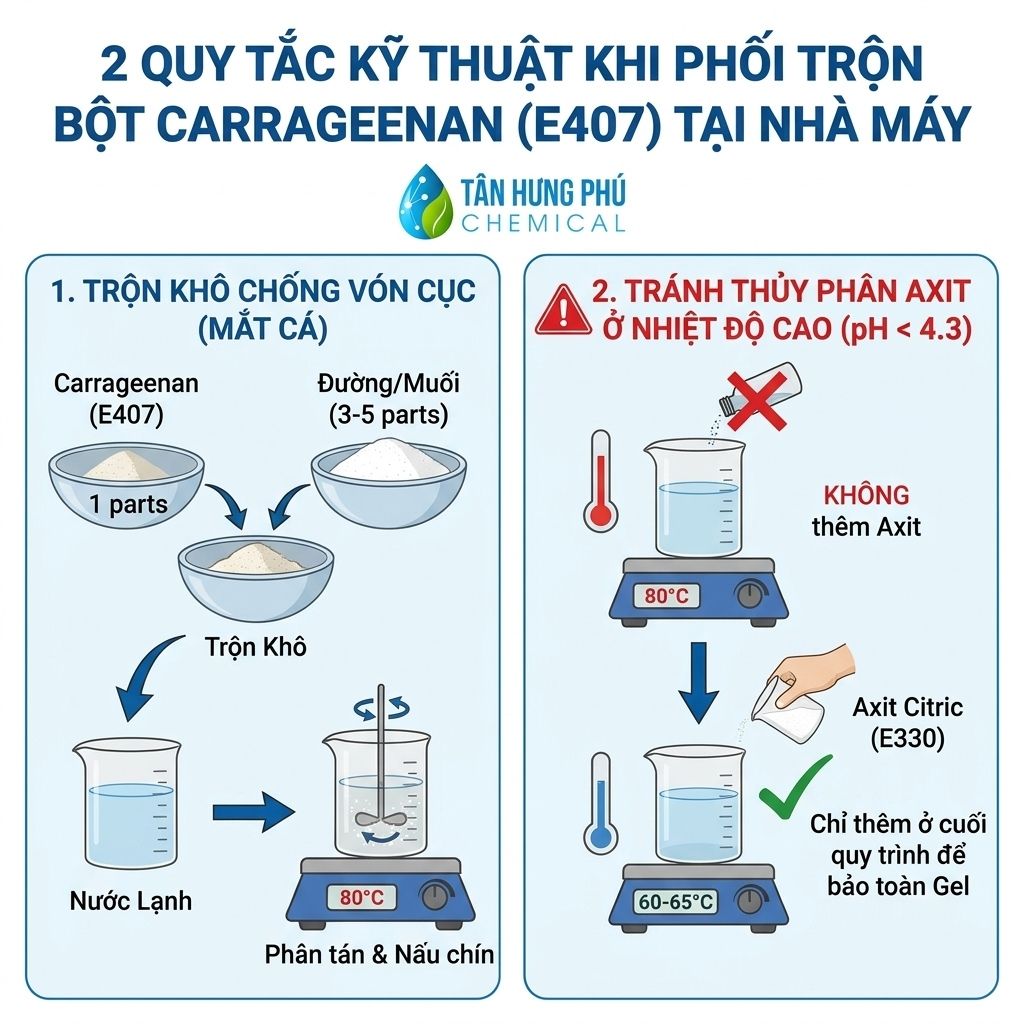
1. Dry Blending Against Clumping (“Fish Eyes”): Due to its fine mesh particle size (120 – 200 mesh) and rapid surface hydration, carrageenan powder will form unhydrated gelatinous clusters if introduced directly into water without shear. Always dry-blend carrageenan with sucrose, crystalline dextrose, salt, or dry seasonings at a minimum ratio of 1 part gum : 3 to 5 parts dry substrate before adding to liquid, or disperse using an inline high-shear venturi mixer.
2. Preventing High-Temperature Acid Hydrolysis (pH < 4.3): The glycosidic bonds linking 3,6-anhydro bridges are highly susceptible to acid-catalyzed scission (autohydrolysis) when exposed to elevated temperatures (> 70°C) at low pH (pH < 4.3), resulting in irreversible loss of gel strength. In acidic fruit jelly production, fully dissolve the carrageenan base under neutral pH conditions first, cool to 60°C – 65°C, and inject Citric Acid (E330) and flavors immediately prior to packaging and cooling.
5. Carrageenan Marcel Philippines (Product Code THP2) Distributed by Tan Hung Phu
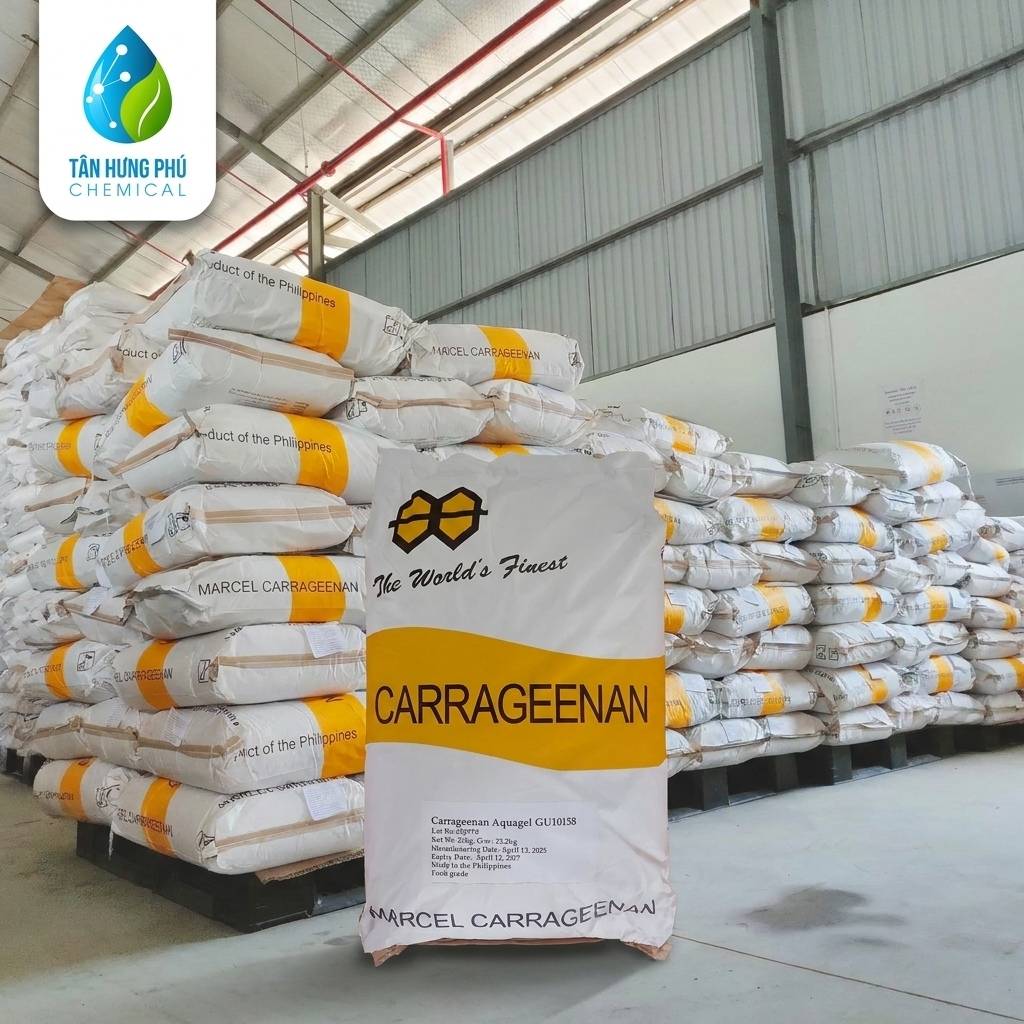
To meet stringent manufacturing requirements regarding gel strength, granulometry, and batch-to-batch consistency, Tan Hung Phu Chemical directly imports and distributes authentic Carrageenan Marcel Philippines (Product Code: THP2):
- Product Code THP2 (Origin: Philippines – 25kg Bag): Carrageenan Marcel Philippines – Food Grade Gelling & Stabilizing Agent E407 (25kg Bag – Product Code: THP2)
The material is supplied in original multi-ply Kraft paper bags with an airtight polyethylene (PE) inner liner (25 kg Net), complete with official batch numbers, manufacture dates, and a 24-month shelf life. In addition to Marcel Carrageenan (THP2), food manufacturers can access our comprehensive range of food-grade texturizers, hydrocolloids, and preservatives (including Xanthan Gum F200 Code THP45, Sodium Alginate Code THP46, Potassium Sorbate Code THP19, and Citric Acid E330 Code THP18) in our online product catalog.
6. Where to Buy Industrial Carrageenan? Wholesale 25kg Bag Pricing in HCMC
For corporate procurement departments and R&D formulations teams evaluating where to buy authentic carrageenan from reliable Philippine origins, industrial carrageenan powder prices (25 kg packaging) across the B2B sector are determined by four core criteria:
- Purification Grade & Gel Strength: Refined Kappa/Iota grades (E407) designed for optical jelly clarity and dairy suspension involve complex extraction and purification, commanding different commercial terms than Semi-Refined (PES / E407a) meat binders.
- Seasonal Seaweed Harvest Dynamics: Raw biomass market pricing for Cottonii and Spinosum red seaweed in the Philippines and global container freight impact seasonal landed costs.
- Procurement Scale (MOQ): Ordering 25 kg bags in pallet volumes, multi-ton lots, or long-term annual supply contracts with Tan Hung Phu unlocks preferential wholesale pricing directly from the importer.
- Regulatory Documentation & R&D Sampling: Every outbound consignment is accompanied by verified Certificates of Analysis (COA), Material Safety Data Sheets (MSDS), valid Food Safety Compliance Registrations, and standard commercial VAT invoices.
REQUEST WHOLESALE QUOTE & R&D SAMPLES – CARRAGEENAN MARCEL PHILIPPINES (THP2)
To obtain official wholesale pricing for Carrageenan Marcel Philippines (25 kg Bag – Product Code: THP2) matched to your manufacturing formulations, please contact our commercial department:
Tan Hung Phu Chemical Co., Ltd. (THP Chemical)
• Technical Support & Wholesale Hotline / Zalo: 0913 711 647
• Request for Quotation (RFQ) Email: tanhungphu@thpchemical.com
• Headquarters & Warehouse: 878B Ta Quang Buu Street, Binh Dong Ward, Ho Chi Minh City & logistics hubs (Prompt nationwide delivery via dedicated trucks and containers).
7. Frequently Asked Questions (FAQ) on Carrageenan E407
Where is food additive Carrageenan (INS 407 / E407) derived from, and is it suitable for vegan applications?
Food additive carrageenan (INS 407 / E407) is a naturally derived polysaccharide obtained through the extraction of red seaweed (marine macroalgae of the class Rhodophyta). Because it is 100% plant- and algae-based, carrageenan serves as an exceptional functional alternative to animal gelatin, fully compliant with Vegan, Vegetarian, Halal, and Kosher regulatory dietary requirements.
What is the operational mechanism of Carrageenan powder in ham, sausages, and processed meat?
When applied as a functional binder in emulsified meats at standard rates of 0.3% – 0.6% (3 – 6 g/kg of raw meat batch), carrageenan powder disperses in the cold moisture during chopping, hydrates thoroughly during the thermal cooking step (75°C – 85°C), and forms a co-gel network interwoven with meat proteins upon cooling. This provides natural snap, elasticity, and durable water-fat retention without the use of prohibited chemical additives like borax.
How does Carrageenan (E407) compare with Agar-agar (E406) and Gelatin in dessert jellies?
Agar-agar produces hard, brittle, and slightly opaque gels that crumble easily; animal gelatin creates elastic gels that melt rapidly at warm ambient temperatures (> 30°C). In contrast, carrageenan provides a balanced texture combining crispness with rubbery elasticity, offers exceptional optical clarity, and remains thermally stable under ambient tropical conditions.
Why do acidic carrageenan fruit jellies fail to set or turn soft, and how can this be resolved?
This occurs when Citric Acid (E330) or acidic fruit purees are added early in the boiling cycle. Sustained exposure to high heat (> 75°C) in low-pH environments (pH < 4.3) cleaves the carrageenan polymer chains through autohydrolysis, destroying gelling capacity. The corrective method is to cook and hydrate the carrageenan base under neutral pH first, cool the solution to 60°C – 65°C, and dose acidulants and flavorings immediately prior to depositing.
What functional advantages emerge when combining Kappa Carrageenan with Konjac Gum or Locust Bean Gum (LBG)?
Used independently, kappa carrageenan forms rigid, brittle gels that can exhibit slight syneresis (surface weeping). When combined with Konjac Gum or Locust Bean Gum (LBG), intermolecular synergistic binding takes place, substantially enhancing gel rupture strength, converting the texture from brittle to supple and elastic, and virtually eliminating water syneresis.
Where can manufacturers buy reliable Carrageenan Marcel Philippines in 25kg bags with full documentation?
For manufacturers seeking authentic imported material, Tan Hung Phu Chemical Co., Ltd. is a direct importer and wholesale distributor of Carrageenan Marcel Philippines (Product Code: THP2) in standard 25 kg bags in Ho Chi Minh City. Tiered wholesale volume pricing is accompanied by full COA, MSDS, and statutory food compliance files. Contact our technical sales hotline at 0913 711 647 for prompt quotes.
8. References & International Food Safety Standards
The technical parameters, ionic gelation dynamics, dairy casein micelle interactions, and regulatory safety evaluations for INS 407 / E407 cited in this document are referenced from leading international food authorities and scientific monographs:
- Joint FAO/WHO Expert Committee on Food Additives (JECFA): Monograph & Specifications for Carrageenan (INS 407) – JECFA Evaluations – Specifications on purity criteria, viscosity standards (≥ 5 mPa·s at 1.5%, 75°C), and toxicological classification confirming an Acceptable Daily Intake (ADI) of “Not specified” (Safe under GMP).
- Codex Alimentarius International Food Standards (GSFA): Codex General Standard for Food Additives (GSFA Online) – Carrageenan (INS 407) – Provisions for authorized food categories across meat processing, dairy systems, confections, and beverages under Good Manufacturing Practice (GMP).
- United States Food and Drug Administration (U.S. FDA): Code of Federal Regulations Title 21 (21 CFR § 172.620 – Carrageenan) – Regulatory provisions governing sulfate composition thresholds (20% – 40%) and functions as an emulsifier, stabilizer, and thickener in processed food.
- Regulatory Compliance for Food Additives in Vietnam: Circular No. 24/2019/TT-BYT (and amending Circular No. 17/2023/TT-BYT) issued by the Ministry of Health regulating the management and use of food additives (Permitted listing for Carrageenan INS 407).
Summary: Sourced sustainably from marine red algae and possessing versatile thermo-reversible gelling and protein-binding capabilities, carrageenan (food additive code INS 407 / E407) is a vital hydrocolloid for sausage and ham texturizing, dessert gel formation, and dairy stabilization. Selecting the appropriate functional fraction (Kappa, Iota, or Lambda) and utilizing verified Marcel Philippines Carrageenan (Product Code: THP2) complete with full COA and statutory food safety compliance from Tan Hung Phu Chemical ensures standardized product mouthfeel and manufacturing yield efficiency.
Other News
View detail- What Is PAC 31% Flocculant (Poly Aluminium Chloride)? Electrostatic Attraction & Rapid Flocculation Mechanism in Turbid Water
- What Is TCCA 90% (Trichloroisocyanuric Acid)? High-Available Chlorine & Applications of Powder, Granular, 20g Tablets, and 200g Tablets
- What Is Sodium Alginate (E401)? Brown Seaweed Origin & Calcium Gelation Mechanism
- What is Food Additive Xanthan Gum (INS 415 / E415)? Why is Xanthan Gum F200 Dubbed the "King of Anti-Separation" in Sauces and Beverages?

