
News & Event
Citric Acid (Crystalline Citric Acid E330): Acidulant, Antioxidant for Food & Beverage, and Bio-Descaling Agent
Compiled by Tan Hung Phu Technical Team · Updated:
Across commercial Food & Beverage (F&B) manufacturing, export seafood preservation, and industrial Cleaning-in-Place (CIP) equipment maintenance, Citric Acid (chemical formula C6H8O7, international food additive code E330 / INS 330) is the highest-volume multifunctional organic acid in modern industry. Supplied commercially as translucent white crystalline citric acid that dissolves rapidly and completely in water, this natural tricarboxylic acid unites three core industrial functions: imparting a crisp, refreshing tartness to beverages, chelating free transition metal ions to prevent lipid oxidation and enzymatic browning, and safely dissolving calcium carbonate scale inside stainless steel boilers and RO membranes without causing pitting corrosion.
Executive Summary
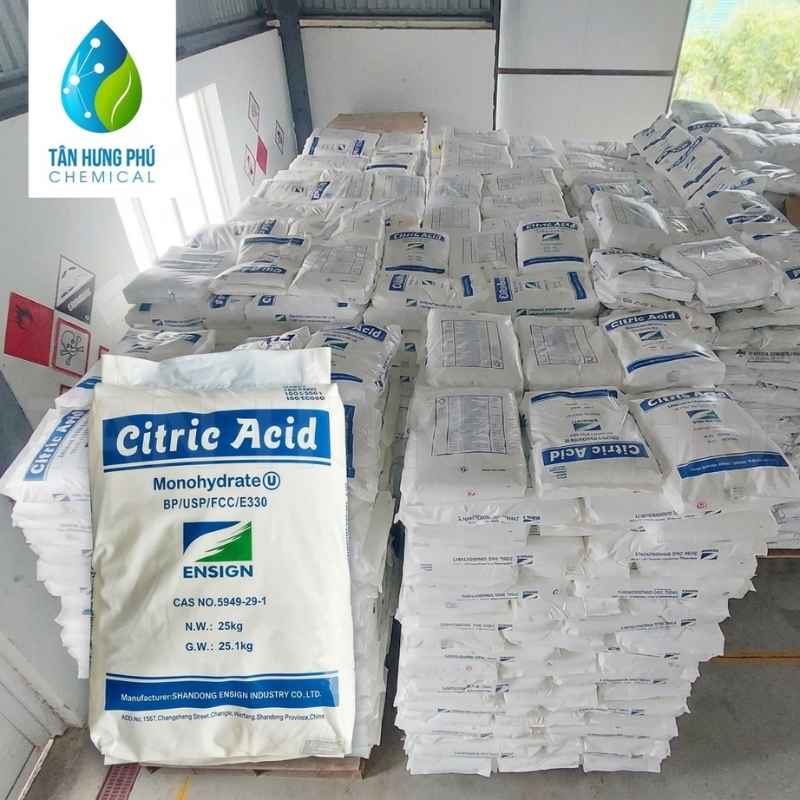
- Chemical Identification: Citric Acid (Formula C6H8O7, international additive code INS 330 / E330), a high-purity tricarboxylic organic acid guaranteed at 99.5% – 100.5% assay (compliant with BP / USP / FCC / E330 standards).
- Two Commercial Grades: Citric Acid Monohydrate (C6H8O7·H2O, CAS 5949-29-1) for cost-optimized liquid/aqueous systems; and Citric Acid Anhydrous (C6H8O7, CAS 77-92-9, moisture ≤ 0.5%) engineered for moisture-sensitive dry powder blends and effervescent tablets.
- Three Application Pillars: Delivers clean sourness and pH buffering in beverages and confectionery; chelates Fe2+ and Cu2+ ions to prevent oxidation and blackspot in produce/seafood; and safely descales CaCO3 mineral deposits in boilers, RO membranes, and stainless steel piping.
- Storage Directive: Store in a cool, dry warehouse below 30°C (avoiding its 36.6°C phase-transition threshold) and below 65% RH to maintain 100% free-flowing crystals free of caking.
Table of Contents:
- 1. Technical Characteristics of Crystalline Citric Acid (C6H8O7 – Food Additive E330)
- 2. F&B Pillar: Beverage Acidulant & Synergistic Antioxidant for Food Color Preservation
- 3. Industrial Pillar: Eco-Friendly Descaling for Boilers, RO Membranes & Green Cleaners
- 4. Quick Comparison: Citric Acid Monohydrate vs. Citric Acid Anhydrous (Code THP18)
- 5. Anti-Caking Warehouse Storage Standards & Plant Safety Protocols
- 6. Where to Buy Citric Acid? Wholesale 25kg Bag Pricing with COA in HCMC
- 7. Frequently Asked Questions (FAQ) on Crystalline Citric Acid E330
- 8. Scientific References & International Standards
1. Technical Characteristics of Crystalline Citric Acid (C6H8O7 – Food Additive E330)
Crystalline Citric Acid (IUPAC nomenclature: 2-hydroxypropane-1,2,3-tricarboxylic acid, molecular formula C6H8O7) is a weak organic acid occurring naturally in citrus fruits and manufactured commercially at ≥ 99.5% Min purity through submerged fermentation of corn starch dextrose using selected strains of Aspergillus niger. Possessing three carboxyl groups (–COOH) and one hydroxyl group (–OH), food additive E330 offers both wide-range pH buffering capacity (pH 2.5 – 6.5) and powerful multidentate chelation with polyvalent metal ions.
| Physicochemical & Technical Parameters (BP / USP / FCC / E330) | Standard Specifications for Crystalline Citric Acid (Code THP18) |
|---|---|
| Commercial Name & International Additive Code | Citric Acid – Food Additive Code INS 330 / E330 |
| Chemical Formula & CAS Registry Numbers | C6H8O7·H2O (CAS: 5949-29-1) | C6H8O7 Anhydrous (CAS: 77-92-9) |
| Physical Appearance | Colorless translucent crystals or white crystalline powder, odorless |
| Assay Purity (Calculated on anhydrous basis) | 99.5% – 100.5% |
| Three Dissociation Constants (pKa at 25°C) & pH (1%) | pKa1 = 3.13 | pKa2 = 4.76 | pKa3 = 6.40 | pH (1% solution): ~2.1 – 2.3 |
| Aqueous Solubility (at 20°C) | Rapidly soluble (~590 g/L to 1,330 g/L depending on hydrate form), yielding a crystal-clear solution |
| Heavy Metals Limits (Lead – Pb, Arsenic – As, Oxalate) | Lead (Pb): ≤ 0.5 mg/kg | Arsenic (As): ≤ 1.0 mg/kg | Oxalate: ≤ 100 mg/kg |
| Packaging & Shelf Life | 25 kg Net Bag (Multi-ply Kraft/PP bag with moisture-barrier PE liner) | Shelf life: 24 – 36 months |
2. F&B Pillar: Beverage Acidulant & Synergistic Antioxidant for Food Color Preservation
2.1. Citric Acid as a Flavor Acidulant and Acidity Regulator E330 in Beverages & Confectionery
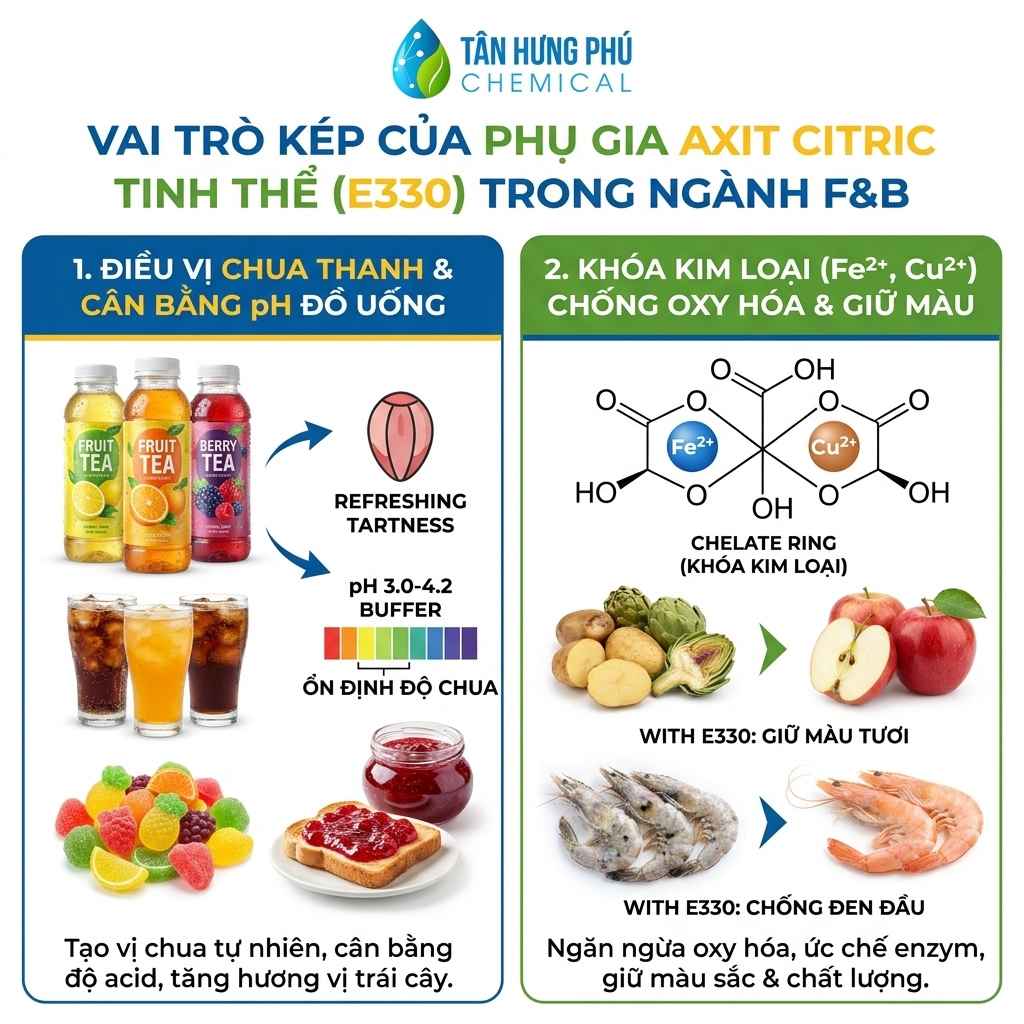
In beverage and confectionery flavor engineering, deploying Citric Acid as an acidity regulator (E330) provides sensory and functional advantages unmatched by any other organic acid:
- Crisp, Clean Tartness with Rapid Flavor Release: When formulated into beverages (carbonated soft drinks, ready-to-drink fruit teas, energy drinks, syrups, and instant drink mixes at typical dosages of 0.1% – 0.35%), Citric Acid delivers an immediate burst of fresh citrus tartness that dissipates cleanly without harsh throat burn or metallic aftertaste, balancing sweetness (optimizing the Brix/Acid ratio) and lifting natural fruit notes.
- Pectin Gelation Activation & Anti-Recrystallization in Confectionery: In gummies, fruit jellies, and jams, dosing food-grade Citric Acid lowers cooking batch pH precisely to pH 3.0 – 3.3—the exact threshold required to neutralize negative charges on pectin chains for firm gel setting while preventing sucrose recrystallization (graininess) in hard candies and fondant.
- Natural pH Preservation & Preservative Synergy: Acidifying chili sauces, condiments, and canned foods below pH 4.5 inhibits spore germination of Clostridium botulinum while shifting weak-acid preservatives like Potassium Sorbate (E202) and Sodium Benzoate (E211) into their undissociated antimicrobial forms, boosting mold and yeast inhibition by 5 to 10 times.
2.2. Synergistic Antioxidant Chelation & Color Retention in Produce and Seafood
Beyond flavor formulation, Citric Acid functions as a powerful synergistic antioxidant and metal sequestrant that protects shelf life and visual appeal:
- Metal Chelation sequestering Free Fe2+ and Cu2+ Ions: Trace levels of pro-oxidant transition metals such as Iron (Fe2+/Fe3+) and Copper (Cu2+) naturally present in oils, meats, produce, and process water catalyze lipid rancidity and destroy Vitamin C. The C6H8O7 molecule utilizes its three carboxylate groups (–COO−) and hydroxyl group (–OH) as molecular claws to bind and sequester Fe2+ and Cu2+ into catalytically inactive chelate complexes.
- Inhibiting Enzymatic Browning & Melanosis in Fresh Produce and Frozen Seafood: Polyphenol Oxidase (PPO) enzymes responsible for surface browning in fresh-cut apples, potatoes, mushrooms, and bamboo shoots—as well as blackspot (melanosis) in frozen shrimp and squid—require copper (Cu2+) cofactors and neutral pH to function. Dipping or glazing raw materials in a 0.2% – 1.0% Citric Acid bath (often paired with Ascorbic Acid E300) chelates copper and lowers surface pH, arresting PPO activity to preserve bright, natural export-grade color.
3. Industrial Pillar: Eco-Friendly Descaling for Boilers, RO Membranes & Green Cleaners
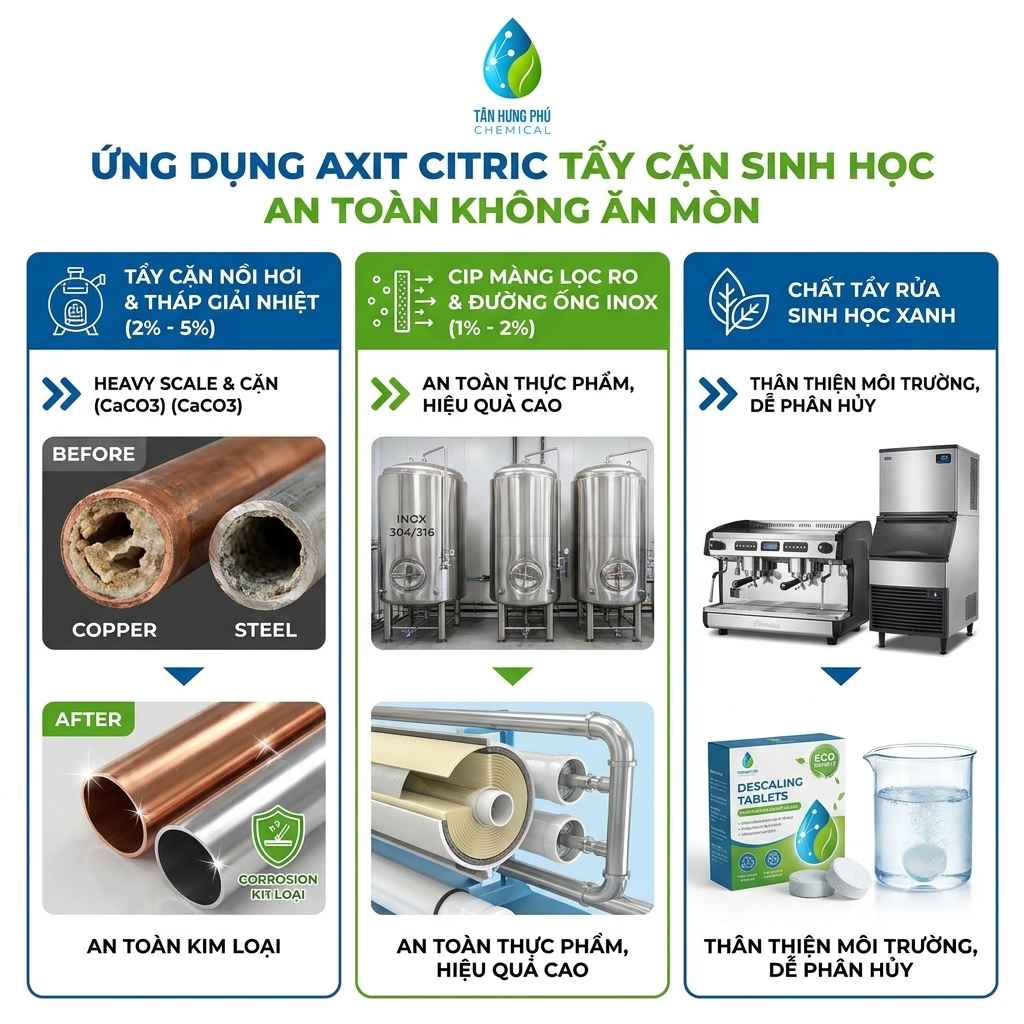
In thermal equipment maintenance and food-plant CIP sanitation, aggressive mineral acids such as Hydrochloric Acid (HCl) or Sulfuric Acid (H2SO4) cause chloride pitting on SUS 304/316 stainless steel, damage delicate reverse osmosis (RO) membranes, and emit toxic fumes. Transitioning to Citric Acid as a 100% biodegradable green descaler has become the industry standard for modern facilities:
3CaCO3 (Hard Limescale) + 2C6H8O7 (Citric Acid) → Ca3(C6H5O7)2 (Soluble Calcium Citrate Complex) + 3H2O + 3CO2↑
- Descaling Steam Boilers, Cooling Towers & Plate Heat Exchangers (PHE): Circulating a 2.0% – 5.0% Citric Acid solution (20 – 50 kg per 1,000 liters of water at 40°C – 60°C for 2 – 4 hours) dissolves stubborn calcium carbonate (CaCO3), magnesium hydroxide, and iron oxide (Fe2O3) rust deposits inside boiler tubes without thinning base metal walls.
- CIP Cleaning of Reverse Osmosis (RO) Membranes & Sanitary Piping: In beverage and pharmaceutical purified water plants, circulating a 1.0% – 2.0% Citric Acid CIP flush strips inorganic mineral scaling and iron fouling from polyamide RO membranes without compromising membrane rejection integrity.
- Commercial F&B Descaling, Green Detergents & Stainless Steel Passivation: Commercial hospitality chains and eco-detergent manufacturers rely on Citric Acid to descale espresso machines, commercial ice makers, dishwashers, and kettles, formulate effervescent cleaning tablets, and perform chemical passivation (per ASTM A967) on newly welded stainless steel tanks.
4. Quick Comparison: Citric Acid Monohydrate vs. Citric Acid Anhydrous (Code THP18)
At Tan Hung Phu Chemical, both Citric Acid Monohydrate and Citric Acid Anhydrous (Product Code: THP18) are maintained in ready bulk inventory in 25 kg Net Food Grade bags (BP / USP / FCC / E330). The comparison matrix below helps procurement and R&D teams select the optimal grade for each production line:
| Selection Criteria | 1. Citric Acid Monohydrate (C6H8O7·H2O) (Crystalline Hydrate with 1 Bound Water Molecule) |
2. Citric Acid Anhydrous (C6H8O7) (Water-Free Anhydrous Crystalline Grade) |
|---|---|---|
| Molar Mass & Moisture Content | M = 210.14 g/mol | Water of crystallization: 7.5% – 8.8%. | M = 192.12 g/mol | Ultra-low moisture: ≤ 0.5% Max (Typically ≤ 0.2%). |
| Crystal Mesh Size & Stoichiometry | Medium/coarse crystals (8 – 40 mesh). Equivalence: 109.4 kg Monohydrate = 100 kg Anhydrous. | Uniform fine crystals (30 – 100 mesh). Provides ~9.4% higher active acid strength by weight. |
| Optimal Applications | Most cost-effective for all wet/liquid systems: • Beverages (carbonated drinks, RTD teas, syrups). • Chili sauces, jams, jellies, seafood glazing. • Liquid descaling solutions for boilers, RO units, and water treatment. |
Mandatory for moisture-sensitive dry blends: • Effervescent vitamin/pharma tablets (prevents premature reaction with NaHCO3). • Instant drink powders, noodle seasoning sachets, bouillon. • Compressed mints, dry flavors, and effervescent cleaning tabs. |
Commercial clients can visit our verified product listing below to download batch COAs and request wholesale quotations:
- Product Code THP18 (Both Monohydrate & Anhydrous Available): Citric Acid Monohydrate & Anhydrous (C6H8O7) Food Grade E330 – 25kg Bag (Code: THP18)
Alongside Citric Acid (THP18), food processors can source complementary acidulants, thickeners, and preservatives (including Food Grade Acetic Acid E260 Codes THP6 & THP47, Dextrose Monohydrate Code THP20, Xanthan Gum F200 Code THP45, Marcel Carrageenan Code THP2, and Potassium Sorbate E202 Code THP19) in our complete product catalog.
5. Anti-Caking Warehouse Storage Standards & Plant Safety Protocols
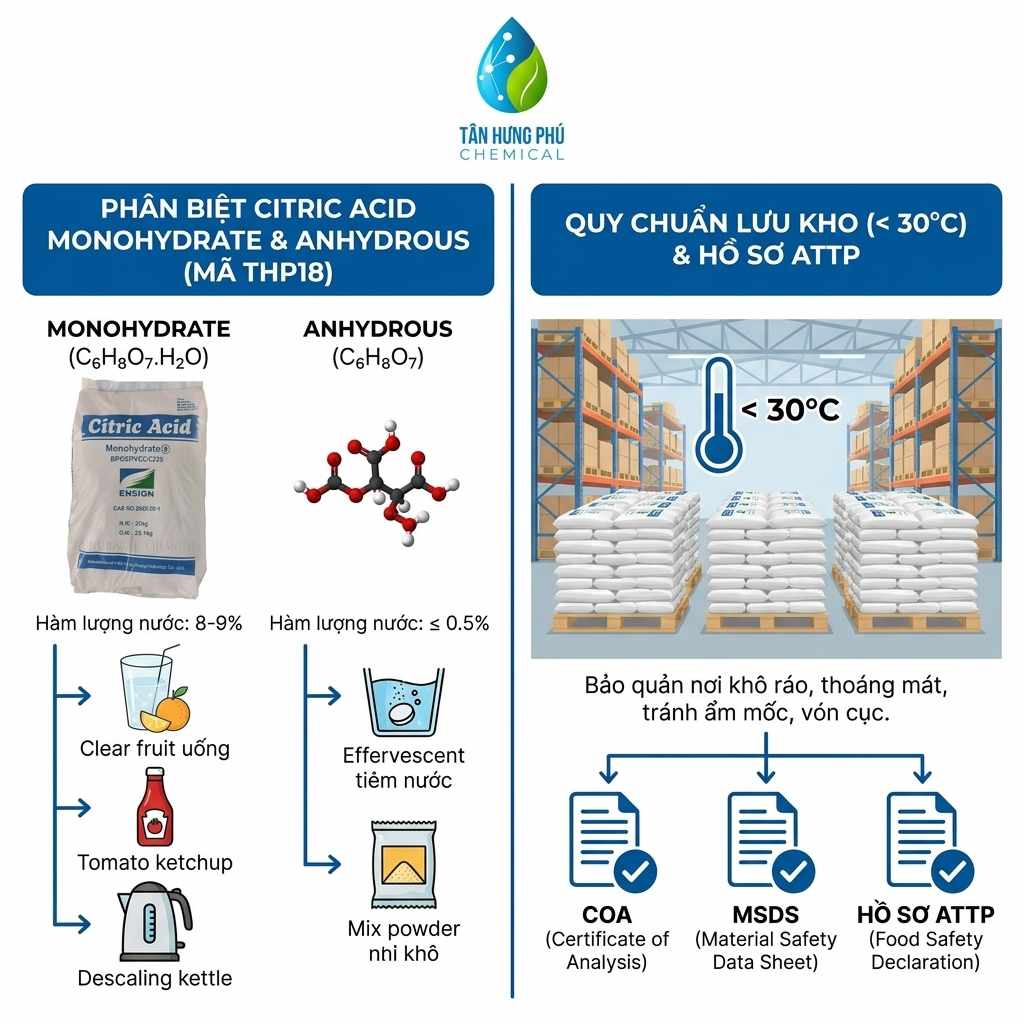
Crystalline Citric Acid (especially the Monohydrate grade) undergoes a physical phase transition at 36.6°C. Storing bags in unventilated metal warehouses exceeding 37°C or above 70% relative humidity causes bound water of crystallization to migrate to crystal surfaces; when temperatures cool overnight, adjacent crystals fuse together into hard lumps (caking).
- Standard Warehouse Conditions: Store 25 kg bags on elevated pallets inside a cool, dry warehouse (temperature < 30°C, relative humidity < 65% RH), shielded from direct sunlight and avoiding excessive pallet double-stacking pressure on bottom layers. Tie off inner PE liners tightly immediately after scooping partial quantities.
- Personal Protective Equipment (PPE): Although recognized as a safe food additive (GRAS), fine airborne dust and concentrated Citric Acid solutions (pH ~ 2.1) cause serious eye irritation (GHS H319 – Causes serious eye irritation). Operators dumping bags into mixing hoppers should wear chemical safety goggles, dust masks, and rubber gloves.
6. Where to Buy Citric Acid? Wholesale 25kg Bag Pricing with COA in HCMC
When procurement teams at beverage plants, food processors, seafood exporters, and industrial cleaning contractors source wholesale Citric Acid, commercial 25kg bag pricing across the B2B market is determined by three primary factors:
- Grade Selection (Monohydrate vs. Anhydrous): Between Citric Acid Monohydrate and Anhydrous, the anhydrous grade delivers ~9.4% higher active dry-basis acid content and therefore commands a slightly higher price per 25 kg bag.
- Order Volume (MOQ): Bulk orders placed by the metric ton, full pallet (40 bags = 1 MT), or full 20’FCL container (25 MT) at Tan Hung Phu Chemical receive direct-importer tiered volume discounts.
- Audit-Ready Documentation & Free-Flowing Guarantee: Every shipment dispatched from Tan Hung Phu is guaranteed factory-sealed with 100% dry, free-flowing crystals free of caking, accompanied by manufacturer batch COA, 16-section MSDS, valid Statutory Food Safety Compliance Filings, and commercial VAT invoices.
REQUEST WHOLESALE QUOTE FOR CRYSTALLINE CITRIC ACID E330 25KG BAGS (CODE THP18)
To receive current wholesale pricing for Citric Acid Monohydrate & Anhydrous (Product Code: THP18) along with complete COA, MSDS, and statutory food compliance files, please contact our B2B commercial team directly:
Tan Hung Phu Chemical Co., Ltd. (THP Chemical)
• Technical Support & Wholesale Hotline / Zalo: 0913 711 647
• Request for Quotation (RFQ) Email: tanhungphu@thpchemical.com
• Headquarters & Warehouse: 878B Ta Quang Buu Street, Binh Dong Ward, Ho Chi Minh City & regional distribution hubs (Fast nationwide delivery via dedicated trucks and container transport).
7. Frequently Asked Questions (FAQ) on Crystalline Citric Acid E330
Why is Citric Acid preferred over other acidulants in beverages and confectionery?
When used in beverages and confectionery as acidity regulator E330, Citric Acid delivers a crisp, authentic citrus tartness with rapid onset and a clean finish that avoids throat irritation or off-odors. It also provides stable pH buffering that protects natural colors and vitamins while enhancing preservative efficacy.
How does Citric Acid act as an antioxidant to prevent enzymatic browning in produce and frozen shrimp?
Its synergistic antioxidant mechanism relies on multidentate chelation via its three carboxyl (–COOH) and one hydroxyl (–OH) groups. The C6H8O7 molecule binds free pro-oxidant metal ions (Fe2+, Cu2+), deactivating copper-dependent Polyphenol Oxidase (PPO) enzymes responsible for surface browning in cut produce and melanosis blackspot in frozen seafood while retarding lipid rancidity.
What advantages does Citric Acid offer over Hydrochloric Acid (HCl) when descaling boilers and stainless steel pipes?
Mineral HCl introduces chloride ions (Cl−) that cause pitting corrosion on SUS 304/316 stainless steel, damage RO membranes, and emit toxic fumes. Conversely, circulating a 1% – 5% Citric Acid descaling solution converts calcium carbonate limescale (CaCO3) and iron rust into soluble citrate complexes gently without attacking base metals, emitting hazardous fumes, or harming wastewater treatment systems.
When should manufacturers choose Citric Acid Monohydrate versus Citric Acid Anhydrous?
Select Citric Acid Monohydrate for all aqueous/liquid systems (beverages, syrups, sauces, seafood dips, boiler descaling) to maximize cost efficiency. Conversely, Citric Acid Anhydrous (moisture ≤ 0.5%) is mandatory for moisture-sensitive dry powder blends such as effervescent tablets, instant drink mixes, and dry seasoning packets to prevent premature fizzing or caking.
What are the regulatory usage limits for Food Additive E330 (Citric Acid) in food processing?
Under Codex Alimentarius (GSFA), U.S. FDA GRAS rules, and Ministry of Health regulations, Food Additive E330 (INS 330) is authorized for use according to Good Manufacturing Practice (GMP – ADI “Not limited”) across nearly all food and beverage categories (typically dosed at 0.05% – 0.5% depending on desired tartness).
Where can I buy wholesale Citric Acid 25kg bags (Code THP18) in Ho Chi Minh City?
Commercial buyers looking to purchase certified Food Grade Citric Acid Monohydrate or Anhydrous 25kg bags in HCMC backed by complete batch COA, MSDS, and statutory food compliance files can contact Tan Hung Phu Chemical Co., Ltd. directly via Hotline/Zalo at 0913 711 647.
8. Scientific References & International Standards
The technical parameters, metal chelation mechanisms, stainless steel passivation standards (ASTM A967), and food safety regulations for Citric Acid (INS 330 / E330) cited in this guide are referenced from authoritative international institutions:
- Joint FAO/WHO Expert Committee on Food Additives (JECFA): Monograph & Specifications for Citric Acid (INS 330) – JECFA Evaluations – Purity specifications and functional evaluation as an acidity regulator, antioxidant synergist, and sequestrant.
- U.S. Food and Drug Administration (FDA): Code of Federal Regulations Title 21 (21 CFR § 184.1033 – Citric Acid) – Affirmation of Generally Recognized as Safe (GRAS) status in foods and beverages.
- ASTM International Standards: ASTM A967 / A967M – Standard Specification for Chemical Passivation Treatments for Stainless Steel Parts (Standards for employing Citric Acid solutions in industrial stainless steel cleaning and passivation).
- Vietnam Ministry of Health Regulatory Framework: Circular No. 24/2019/TT-BYT (and amending Circular No. 17/2023/TT-BYT) on the management and use of food additives (Citric Acid INS 330).
Summary: Uniting three indispensable industrial functions—delivering refreshing acidity in beverages, chelating transition metals to prevent food oxidation, and biodegradeably descaling thermal equipment—Citric Acid (chemical formula C6H8O7) is a cornerstone raw material across modern manufacturing. Selecting the exact crystalline Citric Acid grade (Monohydrate or Anhydrous) certified under Food Additive E330 (Product Code: THP18) with full COA and food safety filings from Tan Hung Phu Chemical ensures superior product quality and sustainable operational efficiency.
Other News
View detail- What is Potassium Carbonate (K2CO3 99.5%)? Origin, Properties and Applications from Glass Manufacturing to Agriculture
- What is Dextrose Monohydrate? Key Differences Between Crystalline Glucose and White Sugar (Sucrose) in Food Processing
- What is Acidity Regulator INS 260 (E260)? Discover Food Grade Acetic Acid 99.85% & Its Differences from Table Vinegar
- What is Potassium Hydroxide Flakes (KOH 90%)? Chemical Properties & Role in Humate Fertilizer and Liquid Soap

