Glacial Acetic Acid 99.85% (GAA) Food Grade – Acidity Regulator & Food Preservative E260 / INS 260
Glacial Acetic Acid 99.85% (GAA) Food Grade (international food additive code: E260 / INS 260) is a high-purity single-component organic acid with the chemical formula CH₃COOH, originating from China and strictly adhering to international food standards FCC & GB 1886.10. Characterized as a clear, colorless liquid with a clean, sharp pungent vinegar aroma, it features an active concentration of ≥ 99.85% with ultra-low trace heavy metals and organic volatile residues. As an indispensable chemical feedstock, food grade acetic acid serves as a premier acidity regulator, sour flavoring agent, and microbial preservative across commercial sauces, condiments, canned goods, and pickling processes.
Product Specifications & Technical Compliance (Food Grade Specs)
| Technical Parameter & Identification | Standard Values (Food Grade Specs) |
|---|---|
| Chemical Name / Commercial Name | Glacial Acetic Acid Food Grade / Food Additive E260 |
| Quality Grade | Food Grade (Food Additive – INS 260 / E260) |
| Standard Compliance | Complies with FCC (Food Chemicals Codex) & GB 1886.10 |
| Country of Origin | China (Made in China) |
| CAS / EINECS Number | CAS: 64-19-7 | EINECS: 200-580-7 |
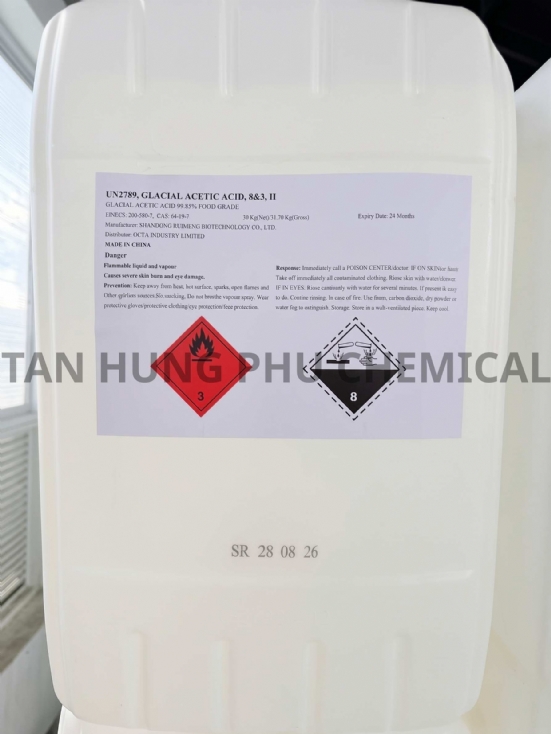
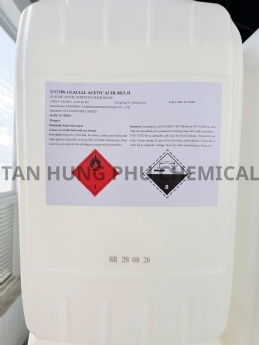
| UN Transport Identification | UN 2789 (Class 8: Corrosive, Class 3: Flammable Liquid, PG II) |
| Appearance | Clear, colorless liquid with a characteristic clean, pungent vinegar aroma |
| Assay (CH₃COOH Content) | ≥ 99.85% wt |
| Moisture / Water Content | ≤ 0.15% |
| Freezing Point | ≥ 16.35°C (Solidifies into ice-like crystals below 16.6°C) |
| Color (APHA / Pt-Co) | ≤ 10 Hazen |
| Non-Volatile Residue | ≤ 0.005% (50 ppm) |
| Formic Acid | ≤ 0.05% |
| Aldehyde (as Acetaldehyde) | ≤ 0.005% (50 ppm) |
| Heavy Metals (as Pb) | ≤ 2.0 mg/kg (ppm) |
| Arsenic (As) | ≤ 1.0 mg/kg (ppm) |
| Permanganate Time | ≥ 2 Hours |
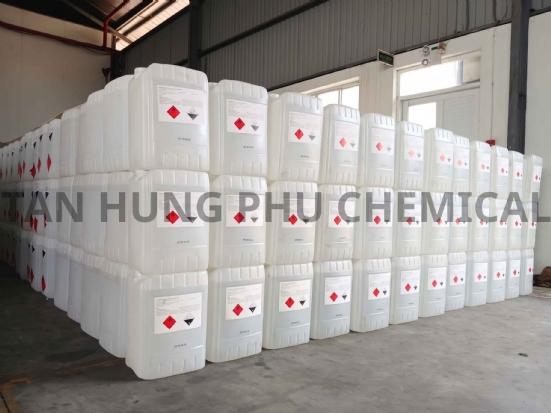
| Packaging Format | 30 kg HDPE carboys |
| Shelf Life | 24 months from date of manufacture |
Key Technological Properties & Core Functionality
- Food-Grade High Purity & Toxin Control: In sharp contrast to industrial grade, glacial acetic acid food grade is purified under closed hygienic conditions to eliminate heavy metals (Lead ≤ 2 ppm, Arsenic ≤ 1 ppm) and organic reducing substances (Permanganate Time ≥ 2 hours). This ensures a clean, natural sour taste without off-flavors or metallic aftertastes.
- Natural Biological Preservation: In its undissociated molecular form, CH₃COOH readily diffuses through the cell membranes of spoilage bacteria (such as Salmonella, E. coli, Listeria) and molds, lowering intracellular pH and suppressing metabolic enzymes to extend product shelf life naturally.
- Robust pH Buffering Capacity: With an acid dissociation constant of pKa ≈ 4.76, acetic acid forms an effective buffer system when paired with acetate salts in the pH 3.5 – 5.5 range, maintaining emulsion integrity, crisp texture, and natural color in canned and pickled vegetables.
- Glacial Solidification Behavior: Due to minimal moisture content (≤ 0.15%), pure acetic acid crystallizes into solid ice-like structures whenever temperatures drop below 16.6°C. This unique physical trait serves as clear visual evidence of concentrated ≥ 99.85% assay.
- Production Cost Efficiency: Concentrated at roughly 20 times the strength of standard household vinegar (5%), sourcing GAA Food Grade allows processors to minimize warehouse footprint, reduce shipping overheads, and tailor precise dilution levels for R&D formulations.
Practical Industrial Applications in Food & Beverage Processing
Certified as an approved food additive under INS 260 / E260, acetic acid e260 functions as a versatile acidulant, flavoring agent, and natural preservative across multiple manufacturing segments:
- Vinegar Formulation & Table Condiments: Primary feedstock for producing commercial culinary vinegar (diluted to 4% – 8%), balancing flavors in soy sauce, fish sauce blends, chili sauce, tomato ketchup, and culinary marinades.
- Emulsified Sauces (Mayonnaise & Dressings): Provides mild sour notes while bringing pH below the critical threshold (pH < 4.4) to inhibit pathogenic bacteria in high-fat, egg-yolk sauce matrices.
- Pickling & Vegetable Canning: Establishes an acidic pickling medium to preserve crunchiness, prevent enzymatic browning, and inhibit Clostridium botulinum spores in pickled gherkins, onions, garlic, kimchi, and canned bamboo shoots.
- Meat, Seafood & Cheese Processing: Diluted for surface carcass and fillet decontamination washes; serves as a protein-coagulating agent for fresh curd cheese manufacturing (ricotta, cottage cheese).
- Bakery Products: Regulates dough pH, optimizes yeast metabolic activity, and prevents microbial "rope spoilage" in sliced packaged bread.
Handling, Dilution & Storage Guidelines (UN 2789 Standards)
- Mandatory Dilution Protocol: Glacial Acetic Acid 99.85% in its concentrated state is highly corrosive. Never consume or add directly to finished food without prior dilution. Always adhere to the universal safety rule: slowly pour acid into clean water under constant stirring to dissipate heat; never pour water into concentrated acid.
- Personal Protective Equipment (PPE): Decanting areas must be properly ventilated. Operators must wear chemical-resistant rubber gloves, splash-proof goggles, and vapor-filter respirators. Keep away from heat, hot surfaces, and open flames.
- Corrosion-Resistant Contact Materials: Preparation vessels, agitators, and transfer lines should be constructed of food-approved HDPE, PP, FRP, or 316L stainless steel. Avoid contact with reactive metals such as iron, aluminum, or copper.
- Warehouse Storage Protocol: Store tightly sealed in cool, well-ventilated areas away from direct sunlight. Maintain ambient warehouse temperatures above 17°C to avoid crystallization (if solidified, thaw containers inside a warm room or warm water bath below 40°C; never apply direct open flames).
⚠️ CHEMICAL SAFETY & COMPLIANCE NOTICE (GHS DANGER - UN 2789, CLASS 8 & 3, PG II):
• Hazard Identification: Flammable liquid and vapour. Causes severe skin burns and permanent eye damage.
• First Aid for Skin Contact: Immediately remove all contaminated clothing and flush affected skin with copious water or an emergency shower for at least 15 minutes.
• First Aid for Eye Exposure: Rinse cautiously with clean water for several minutes. Remove contact lenses if present and easy to do, continue rinsing, and seek immediate medical attention.
• Food Regulatory Compliance: Processors must ensure dosing rates conform to Good Manufacturing Practice (GMP) and local food additive safety regulations.
Commercial Supply Policy at THP Chemical
Tan Hung Phu Chemical Co., Ltd. is a premier B2B distributor of Glacial Acetic Acid 99.85% Food Grade (E260), providing reliable supply backed by strict compliance standards:
- Certified food-grade quality originating from China, fully compliant with FCC and GB 1886.10 specifications (≥ 99.85% assay).
- Complete documentation package: Batch-specific Certificate of Analysis (COA), 16-section MSDS, and legal VAT sales invoices.
- Flexible packaging formats: 30 kg HDPE carboys tote containers to match all production scales.
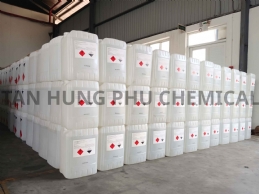
- Substantial ready inventory maintained at our Ho Chi Minh City warehouse, offering R&D sample support and dependable nationwide delivery.
Frequently Asked Questions (FAQ)
1. What is the difference between Food Grade and Tech Grade Glacial Acetic Acid?
Although both may test at ≥ 99.85% assay, Food Grade (INS 260 / E260) undergoes rigorous purification to meet FCC / GB 1886.10 standards, controlling heavy metals (Pb ≤ 2 ppm, As ≤ 1 ppm), non-volatile residues (≤ 50 ppm), and organic impurities (Permanganate Time ≥ 2 hours). Technical Grade is intended strictly for textiles, rubber, and chemical synthesis, and must never be used in food processing.
2. Does freezing/crystallization affect product quality?
No. Pure anhydrous acetic acid has a natural freezing point of 16.35°C to 16.6°C. Solidifying into crystalline ice structures during colder weather is a normal physical property confirming high purity. Upon gentle thawing in a warm area, its chemical integrity and sensory profile remain 100% unaltered.
3. What is the standard dilution ratio to make 5% culinary vinegar?
To produce a 5% standard acidity solution, approximately 1 part by weight of Glacial Acetic Acid 99.85% is blended with 19 parts of purified demineralized water (RO water). Plants should perform acid-base titration to standardize the exact titratable acidity.
4. What materials are recommended for bulk storage of GAA Food Grade?
Virgin high-density polyethylene (HDPE) carboys/drums, heavy-duty composite totes, and food-grade 316L stainless steel tanks provide optimal corrosion resistance without leaching trace contaminants into the food additive.
Food processing plants, sauce manufacturers, and condiment producers seeking bulk commercial quotations for Glacial Acetic Acid 99.85% Food Grade (E260 – 30kg Carboys / Drums / IBC Totes), batch COA/MSDS documents, or R&D test samples, please contact our sales team directly:
Tan Hung Phu Chemical Co., Ltd. (THP Chemical)
Hotline / Zalo: 0913 711 647
Email: tanhungphu@thpchemical.com